How to Identify Authentic Vintage Denim: A Buyer's Guide
Why Vintage Denim Matters
Not all denim is created equal. Pre-1990s denim — especially American-made pieces from brands like Levi's, Lee, and Wrangler — was constructed with heavier-weight cotton, tighter weaves, and construction techniques that simply aren't used in mass production today. The result? Jeans that fit better, last longer, and tell a story.
But navigating the vintage denim market can feel overwhelming. Here's exactly what to look for.
Step 1: Check the Label
The label is the fastest way to date a pair of vintage jeans.
Levi's Red Tab Labels
- All-caps "LEVI'S" on the red tab = post-1971. A lowercase "e" in "LeVI'S" = pre-1971, and therefore more collectible.
- Two-line care instructions first appeared in the late 1960s. Multiple languages on the care label = likely 1970s or later.
- "Made in USA" = a strong vintage indicator. Levi's moved most production offshore in the 1990s.
WPL Numbers
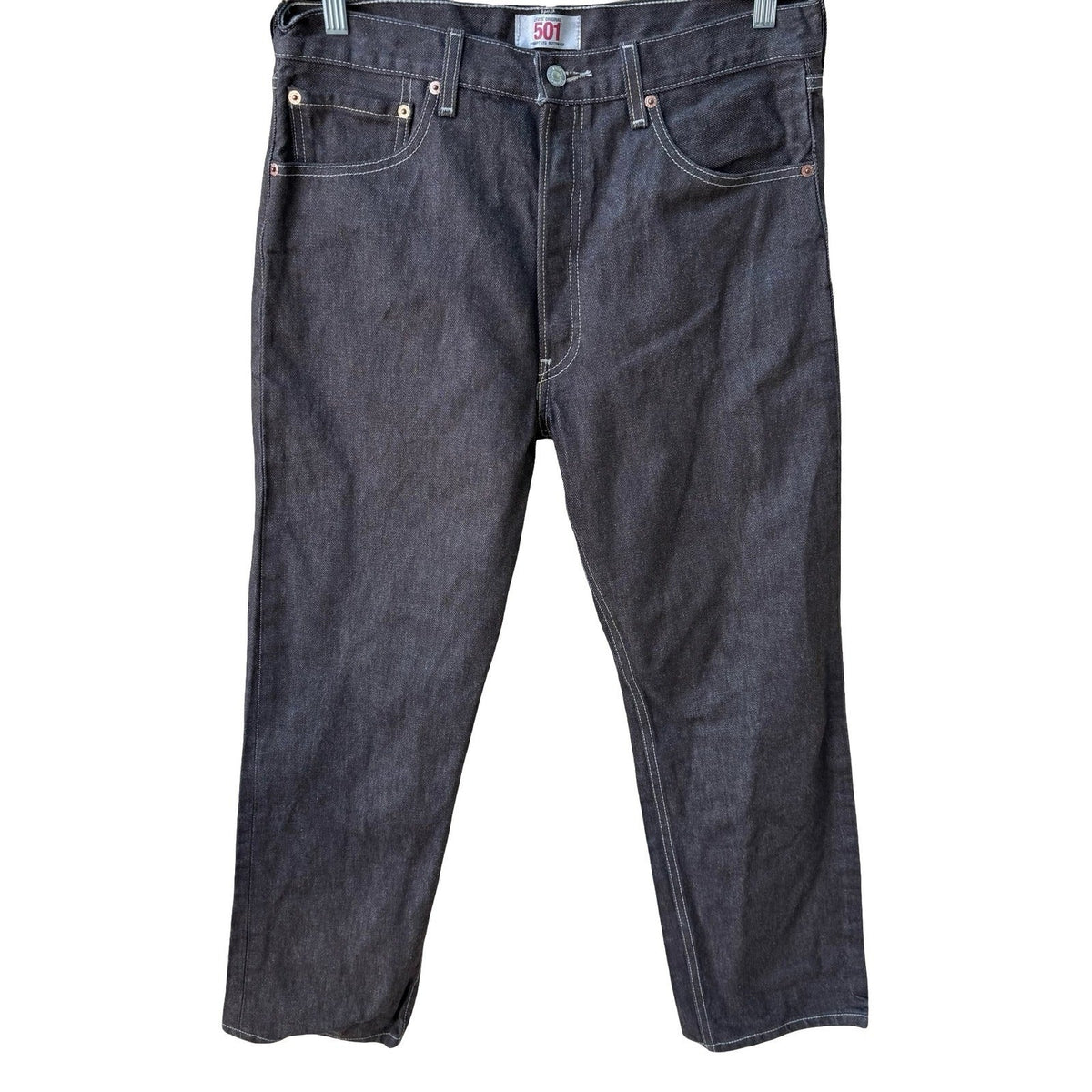
WPL (Wool Products Label) numbers were required on American-made garments between 1941 and 1971. Finding a WPL number on your Levi's is a reliable indicator that you're holding a truly vintage piece. Our Levi's 501 WPL 423 Vintage Jeans are a great example of denim that carries this heritage marking.
Step 2: Examine the Hardware
- Copper rivets — older Levi's used copper rivets; many reproductions use zinc or painted alternatives.
- Metal zippers (vs. plastic) — older pieces often have metal zip pulls from brands like Talon or Scovill.
- Shank buttons — look for a number stamped on the back of metal buttons, which can help date the piece to a specific factory run.
Step 3: Feel the Fabric
Authentic vintage denim has a distinct texture that's hard to fake:
- Weight and density — vintage denim is typically heavier (12–14oz) than modern jeans.
- Selvedge edges — jeans made on old shuttle looms have a clean, tightly-woven "self-edge" on the inner seam. Visible selvedge with a colored thread running through it is a hallmark of premium vintage construction.
- Chain stitching — look at the outseam and hem. Chain stitching (a looping single-thread stitch) is a marker of pre-1980s American manufacturing.
Step 4: Look at the Fit and Cut
Vintage denim silhouettes are very different from modern cuts:
- 501s (straight leg) — the gold standard of vintage Levi's, straight from thigh to ankle, high rise, designed to be worn at the natural waist.
- Tapered leg — common in the 1980s and early 90s; narrowed at the ankle.
- Flare and bell-bottom — a hallmark of 1970s denim; the wider the flare, the more era-accurate.
What Makes Vintage Denim Worth Buying?
Beyond authenticity, vintage denim is worth buying because:
- It's already broken in — the stiffness of new raw denim is replaced by a soft, personalized texture.
- The fading patterns (called "honeycombs" behind the knees and "whiskers" at the hips) develop naturally and look incredible.
- It's sustainable — buying secondhand keeps perfectly good garments out of landfill.
- It's genuinely scarce — you won't see anyone else wearing the exact same pair.
Shop Authentic Vintage Denim
At Shoplis Vintage, every denim piece in our collection is hand-inspected for authenticity and condition. Browse our Pants, Jeans & Shorts collection to find your next pair — and our Vintage Men's Clothing collection for more curated denim options.
Whether you're a collector chasing that lowercase-e red tab or just want a great pair of jeans that will outlast anything at the mall, vintage denim is always the right answer.